

The cost of hot water systems has changed significantly over the past few years, driven by rising energy prices, increased demand for energy-efficient technology, and new government rebates. If you are researching a replacement or upgrade in 2026, relying on outdated price guides can give you a very misleading picture of what to budget for.
The price you will pay for a hot water system today depends on several key factors, including the type of system you choose, your household size, your energy supply, installation complexity, and whether you are eligible for NSW government incentives. Some systems are cheap to buy but expensive to run, while others cost more upfront but can save you thousands over their lifespan.
In this updated 2026 guide, we break down current price ranges, running costs, government rebates, and how to choose the right system for your home, so you can make a confident, informed decision.
How Much Do Hot Water Systems Cost?
The upfront cost of a hot water system can vary widely depending on the type of system, its size, energy source, and whether it is a basic replacement or part of a larger upgrade. In 2026, homeowners have more options than ever, from low-cost electric systems to high-efficiency heat pumps and solar hot water units.
The table below provides typical price ranges based on current CHOICE consumer data, reflecting entry-level through to premium systems across Australia. Prices reflect typical retail cost of the unit (not including installation) unless otherwise stated.
| Hot Water System Type | Typical Price Range (AUD) |
|---|---|
| Electric storage tank system Best for Budget-conscious households, small families, and homes needing a simple, low-cost replacement where off-peak power is available. | $650 – $2,500 |
| Electric instantaneous system Best for Homes with limited space, low-to-moderate usage, and those wanting endless hot water on demand without a storage tank. | $600 – $2,000 |
| Electric heat pump system Best for Households looking to cut long-term power bills, improve energy efficiency, and take advantage of NSW government rebates. | $2,200 – $6,800 |
| Gas storage tank system Best for Medium to large households with an existing gas connection that want reliable performance at a moderate upfront cost. | $1,000 – $7,000 |
| Gas instantaneous system Best for Busy homes needing continuous hot water, fast recovery times, and strong water pressure without running out. | $700 – $3,000 |
| Solar hot water system (any booster type) Best for Homeowners wanting the lowest long-term running costs, strong environmental benefits, and who have good roof access and sun exposure. | $4,000 – $8,000 |
These price ranges are a general guide only and are based on typical retail pricing and entry-level installation scenarios. Actual costs will vary depending on system capacity, brand selection, installation complexity, access conditions, electrical or gas upgrades, and your property’s individual requirements. Switching system types, such as from electric to gas or heat pump, may increase installation costs. Always request a detailed written quote for your specific home.
Hot Water System Running Costs
Ongoing energy costs are one of the biggest differences between hot water system types, and they can add up to thousands of dollars over the life of a system. While upfront price is important, understanding what you will pay year after year to run your hot water system is just as critical when choosing the right option for your home.
The graph below, based on CHOICE and Sustainability Victoria data, shows the estimated annual running costs for different hot water systems for one to four person households, using between 50 and 150 litres of hot water per day. It provides a helpful comparison of how each system performs under typical Australian usage conditions.
Data source: Choice.com.au
The figures shown are indicative only and are intended as a general comparison guide. Actual running costs will vary depending on household size, water usage habits, electricity and gas tariffs, solar availability, system efficiency, and local energy pricing. Natural gas connections, off-peak electricity tariffs, and suitable solar installation conditions are not available to all homes. More efficient systems may have lower running costs but higher upfront purchase prices. Always seek tailored advice based on your property and usage.
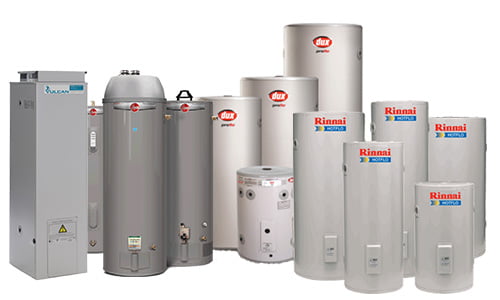
Which Hot Water System Do I Need?
There is a lot to consider with your hot water service selection. As well as the size of the unit to meet your household usage needs, you also need to consider what type of unit is best: Electric, Gas, Solar or Heat pump?
Water Service Types
There are two types of hot water service systems to choose from.
- The traditional storage water unit. These heat and maintain a tank of water for your use. This is the most common type of household hot water system where hot water is instant but limited to the tank’s storage capacity.
- Tankless or continuous water heaters. These rapidly heat water as you use it. Tankless are more expensive than those with tanks and it will take a couple of minutes to heat up but you get access to hot water without limit and it is more energy-efficient.
You’ll find both types of systems available across all water heater styles: electric, gas, solar and heat pump varieties.
Water Service Styles
There are four styles of hot water systems to choose from: electricity, gas, solar or heat pump. Typically the easiest option is to choose to match your replacement with the style already installed.
Electric
The most popular choice by far, electric heating units are the cheapest to buy and install but the most expensive to run. If you are lucky enough to have access to off-peak rates then you may need to pay a little more for a bigger storage tank.
Gas
Natural gas is a good option if you have a connection to it. As well as being cheaper overall, gas prices are consistently low regardless of the time of day. If you don’t have a connection to natural gas there is the option to use LPG bottles, however, the costs are significantly higher and you have the inconvenience of organising bottle swaps, which also reduces your hot water reliability.
Solar
Solar energy is on the rise as more people turn to green energy and look to cut their dependency on the expensive power grid. While the systems are more expensive to buy and install you can expect to make that money back as your power bills will sharply decrease.
Heat Pump
Heat pumps work by taking heat from the outside air and reusing it to heat your water. They are estimated to be three times more energy-efficient than electric heating systems. One drawback is they are noisy. Not only do they need to be installed outside with good ventilation, but you will also need to make sure they are a good distance from neighbour’s fences.
Water Service Size
The size of your hot water system is going to have a big influence on the cost: Larger tanks cost more money, however, for those with busy households, this might be the best option.
As a guide, we say that each person uses around 50 litres of hot water a day. This may be more for those who love a long shower or frequently set the washing machine cycle to hot.
In general, you can expect that for a four-person household, a hot water system size will need to be:
- Electric: 125–160L tank for a continuous flow or 250–315L for off-peak.
- Gas: 135–170L tank.
- Heat pump: 270–315L tank
When it comes to solar you do need both solar collector panels and a storage tank. Two panels would be enough (four square metres of solar collector area) to cover the hot water needs of a four-person home along with a 300–360L tank.
Water Service Brands
Now that you know the type and size you need for your home, all that is left to do is decide on your brand.
If your previous system was reliable and worked as requested it’s a safe bet to buy it again. If you would like some help on brand choice, you can also go to customer surveys.
Canstar Blue’s customer survey found that Solahart water heaters performed best overall. Solahart was given the maximum of five stars in the following categories;
- Overall satisfaction
- Features and Functionality
- Performance
- Design
Solahart was awarded four stars in the following category;
- Value for money
Chromagen was the second best performing hot water brand according to customers who own one, where they were awarded 4 stars in every category except Value for Money, where it was awarded 5 stars. This was the only brand to get the full five-star rating for value for money.
Rinnai, AquaMax and Rheem performed strongly with mostly 4 stars across their categories. AquaMax received 4 stars consistently while Rinnai and Rheem both scored 3 stars for Value for Money.
Dux, Vulcan, Thermann and Bosch sat at the bottom of the table with an even mix of three and four stars across the categories when customers were asked how satisfied they were with their water system purchase.
Delivery Cost and Accessibility
When you are finalising your hot water service budget leave some room for delivery costs.
Some vendors will provide shipping fees in the overall price and others will require you to pay extra.
How much that is will depend on the size of the unit, the travelling distance as well as any accessibility issues. If you have difficult access areas (like stairs) this will most likely increase your delivery costs and possibly also installation costs if it takes technicians longer to get into the workspace.
Hot Water Installation
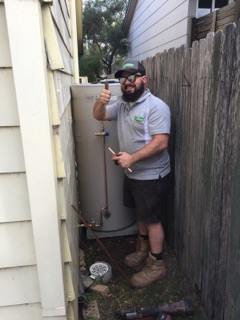
Hot water system prices do not include installation. You will need a professional to do the installation, be that for gas, electric or solar.
For electric heating, gas or pump-style units that are a straightforward swap of one unit for another similar one, work can be done in two to three hours, costing somewhere around $220 and $660.
Labour costs can be high for the units that are more complex. For example, solar power is comparatively more expensive and time-consuming to install and may take a couple of days to complete. Switching to a different energy style will also take more time and incur higher fees, plus the additional costs of new fittings and pipes. Costs for switching to another unit style could be anything from $1,500 to $3,000.
Make sure you get some quotes to compare and factor this into your overall budget.
Disposal of the old system
A lot of customers overlook old unit disposal. This is not always part of the service so check with your installation provider to know what the process is.
Government Rebates & Incentives for Hot Water Systems (NSW)
If you live in New South Wales, upgrading your hot water system now could cost less than you think, thanks to government-backed rebates and discounts.
What’s the scheme?
Under the NSW Household Energy Saving Upgrades Program (part of the state’s broader energy-efficiency incentives), eligible households replacing old electric or gas hot water systems with more efficient options (like air-source heat pumps or solar hot water) can receive a discount applied at the time of quote, rather than a rebate you claim later.
In other words: the savings come off your installer’s quote, making the new system more affordable from day one.
What kind of savings?
- Replacing an electric water heater with a high-efficiency air-source heat pump can give you up to $640 off your quote.
- Replacing a gas water heater with a heat pump may yield up to $330 off.
Because the discount is applied at quote time, what looks like an expensive upgrade becomes far more accessible, especially if you were already planning an upgrade or replacement.
What to check to be eligible
To benefit from the rebate/discount:
- Your new hot water system must be installed by an approved installer working with an Independent Pricing and Regulatory Tribunal (IPART)-accredited Certificate Provider.
- The upgrade must involve replacing an existing electric or gas water heater (not converting from something else, or adding a second system).
- The new system must meet the efficiency standards set by the scheme (e.g. approved air-source heat pump or solar water heater).
What this means for you as a homeowner
- The rebate significantly lowers the upfront cost of upgrading to a more efficient, lower-running-cost system (like a heat pump or solar).
- Given rising energy prices, this can mean a big saving over 5–10 years, not just on installation, but on power bills too.
- Because the incentive is built into the quote, you don’t need to chase paperwork or wait for a post-installation payout.
Source: energy.nsw.gov.au
There is no single “best” hot water system for every home. In 2026, the right choice comes down to balancing upfront cost, long-term running costs, household demand, and available government rebates.
Electric systems remain the cheapest to buy, but they often cost the most to run. Gas systems offer fast, reliable performance at a moderate cost. Heat pump and solar systems require a bigger upfront investment, but they deliver the lowest ongoing energy bills and are supported by NSW government incentives that can significantly reduce the initial price.
If you are replacing an existing system, switching from electric or gas to a heat pump may now be far more affordable than many homeowners realise. For growing families, high-usage households, or those planning to stay in their home long-term, choosing an efficient system can deliver real financial benefits over time.
The smartest next step is to have your hot water needs professionally assessed and obtain a detailed written quote based on your household size, access conditions, and energy supply. This ensures you choose a system that suits your home today and continues to perform well into the future.
Trusted Plumbing Services

Fluid Plumbing Services works hard to give you the highest quality hot water systems for the best prices possible. We partner with the industry’s top brands to bring you reliable and trusted services and products.
Let our expert technicians in hot water systems on the Central Coast install and maintain your hot water service for longer life and higher efficiency, or for hot water systems in Newcastle, get in touch with us to see what we can do to keep you in hot water.