Ever opened your dishwasher and found water sitting at the bottom? It’s a common problem many households face, and while it looks worrying, most clogs are easy to fix at home. With a few simple steps, you can often get your dishwasher draining properly again without needing specialised tools.
The key is knowing what to look for and following safe steps to clear blockages. Below, we’ll walk you through the signs, causes, and solutions for a clogged dishwasher—plus when it’s time to call in a professional.
Common Signs Your Dishwasher is Clogged
| Sign | What It Means | Quick Check |
| Water sitting at the bottom | Drainage is blocked | Look for food scraps in the filter |
| Dishes not clean | Water not circulating properly | Check spray arms for blockages |
| Strange gurgling sounds | Air or water flow problem | Inspect drain hose for kinks |
| Bad smell | Food or grease build-up | Remove and rinse the filter |
Even with regular use, dishwashers are prone to small blockages that slowly build up without notice. Food scraps that rinse off plates, grease that cools and hardens in pipes, and soap scum all contribute to clogs. Because the dishwasher connects to your home’s plumbing, even minor slowdowns can spread to the sink or disposal. Knowing this helps you catch problems early, rather than waiting until water is standing in the bottom of the appliance.
The Problem
A clogged dishwasher is more than just an inconvenience. Signs of a clog include:
- Water pooling at the bottom – standing water that doesn’t drain after a cycle.
- Dishes not coming out clean – poor water flow means food particles remain.
- Strange noises during the cycle – gurgling or grinding sounds suggest drainage issues.
- Unpleasant odours – stagnant water quickly develops a smell.
Left untreated, clogs can cause more than standing water. They may damage internal parts, waste water and energy, create foul odours, and even lead to leaks in your kitchen. Recognising these symptoms early helps prevent costly repairs.
Common Causes
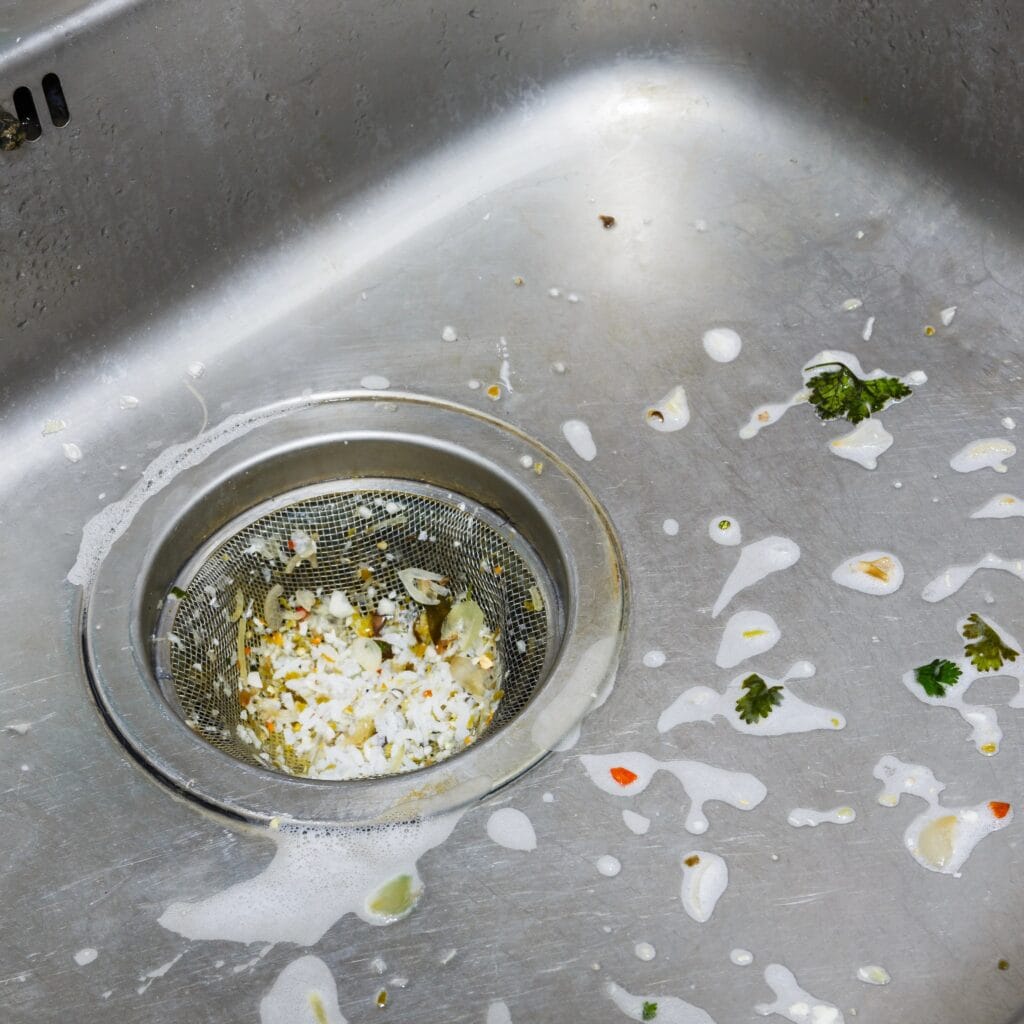
Dishwasher clogs usually trace back to one of a few culprits:
- Food debris and grease – crumbs, pasta, and oils that slip through the filter can build up in the drain. Over time, grease solidifies, trapping other debris and forming a stubborn blockage.
- Soap residue – detergent can leave behind a film that sticks to the walls of pipes and hoses.
- Blocked filter – when not cleaned regularly, the filter becomes overloaded, stopping water from draining.
- Drain hose issues – a kinked or clogged hose restricts water flow.
- Garbage disposal backups – if the dishwasher connects to a disposal that hasn’t been cleared, clogs can spread between systems.
Another overlooked factor is hard water. Minerals in hard water can collect inside the spray arms, hoses, and drain areas, reducing water pressure and leaving behind chalky buildup. Over time, this makes clogs more likely and forces the dishwasher to work harder. If your home has hard water, consider regular descaling treatments or a water softener to protect your appliance.
Step-by-Step Solutions
Before you start, always turn off the power and water supply to your dishwasher for safety. Then work through these steps:
1.Remove dishes and racks
Take out any dishes and racks so you can reach the filter, spray arms, and sump area at the bottom.
2.Bail out standing water
Scoop pooled water into a bucket or sink using a cup. Use an old towel or sponge to soak up any remaining water.
3.Check and clean the filter
Locate the filter (usually at the bottom of the machine). Twist or lift it out and rinse under warm, soapy water. Scrub away grease and trapped food with a sponge or soft brush. Wipe the surrounding area clean before replacing it.
4.Inspect the spray arms
Remove the spray arms if possible and check for blockages. Use a toothpick, skewer, or small brush to poke debris out of the holes. Rinse under warm water.
5.Clear the drain
Look around the sump area and drain for debris. Wipe away grease, food scraps, or other obstructions.
6.Check the drain hose
Find the hose connecting your dishwasher to the sink plumbing. Ensure it isn’t kinked. If you suspect a blockage, disconnect the hose (carefully, and following your manufacturer’s instructions) and flush it through with hot water.
7.Run a cleaning cycle
Pour a cup of white vinegar or sprinkle bicarb soda into the base of your dishwasher. Run a hot rinse cycle to dissolve grease and flush away any leftover build-up.
8.Test your dishwasher
Reconnect everything, replace the racks, and run a short cycle. If the water drains properly, your dishwasher is back in action.
Tip: Avoid using harsh chemical drain cleaners in your dishwasher as they can damage internal parts. Stick with natural cleaners like vinegar and bicarbonate of soda.
For tougher clogs that don’t clear with vinegar and baking soda, you can try a plumber’s snake or a straightened wire hanger to gently dislodge debris in the hose. Take care not to puncture the plastic. If resistance remains after several attempts, that’s usually the point to call in professional help.
When to Call a Professional
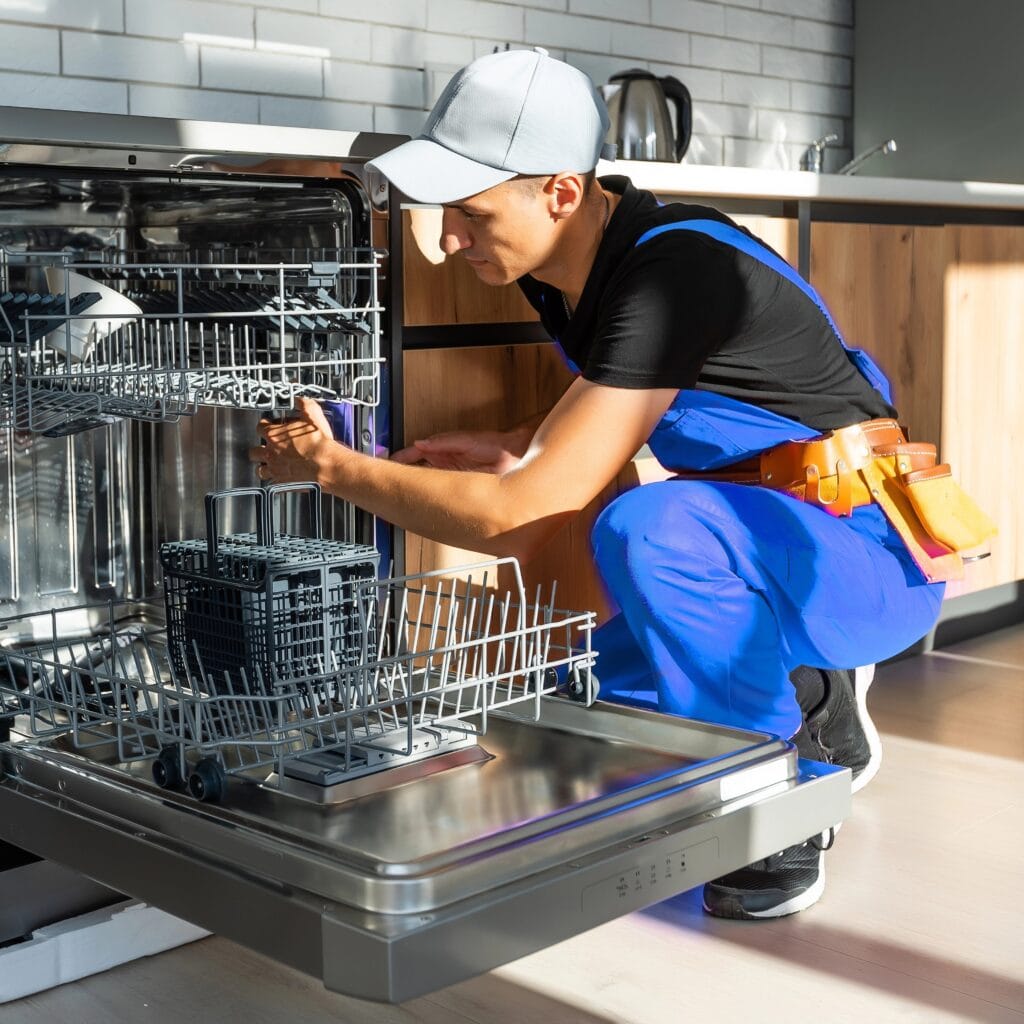
Sometimes a clog isn’t just about food scraps—it may signal a bigger plumbing or mechanical problem. Call a licensed plumber if:
- Water keeps backing up after you’ve tried these steps.
- You notice leaks under the machine.
- The dishwasher makes loud grinding or electrical noises.
- You’re not comfortable disconnecting hoses or plumbing parts.
Improper installations and deep clogs can cause serious water damage if handled incorrectly. A professional plumber can safely inspect connections, test components, and get your dishwasher draining properly again.
Conclusion
Most dishwasher clogs are small problems that you can solve by cleaning the filter, clearing spray arms, and checking the drain hose. Regular maintenance, like wiping the filter monthly and running a vinegar rinse, prevents many blockages before they start.
By making dishwasher care part of your kitchen routine, you’ll save time, keep your dishes sparkling, and avoid unnecessary repairs.
If your dishwasher keeps clogging, it could be a bigger plumbing issue. A licensed plumber can check your system for you and make sure your appliance is running safely and efficiently.